
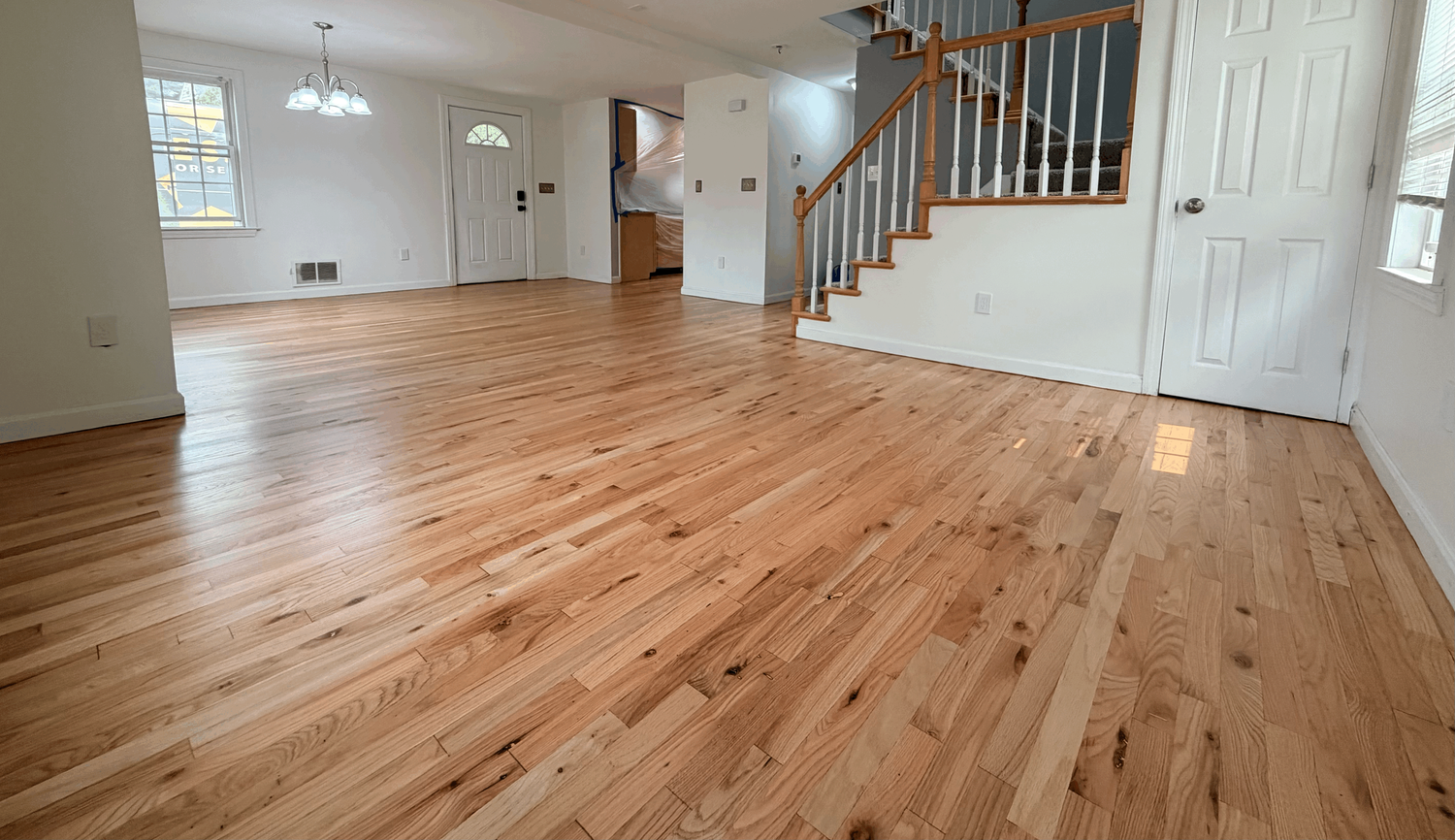
Hardwood floorscreen & recoat
Screen and recoat adds a new coat of finish after cleaning and lightly abrading the existing coating. We check compatibility before recommending this service.
Surface wear • Finish renewal • Professional evaluation
No full sanding when suitable
The floor is not sanded to bare wood
Applied after proper preparation
About screen and recoat
A screen and recoat renews the existing protective finish rather than removing the floor down to bare wood. The surface is cleaned and mechanically prepared so a new compatible finish can bond properly.
It can be a good option when the finish is worn or dull but the floor does not have deep damage, major discoloration, or a color you want to change.
Recoat or refinishing
| Screen & Recoat | Full Refinishing |
|---|---|
| Dull finish | Deep scratches |
| Light surface wear | Gray or exposed wood |
| Fine scratches in the finish | Pet or water stains |
| Color still looks good | Want to change stain color |
| Finish needs renewal | Heavy wear |
| No repairs identified during assessment | Repairs may be needed before refinishing |
When to consider recoating
Loss of sheen
The finish has lost its sheen or looks uneven.
Light surface scratching
Marks are in the finish rather than deep in the wood.
Finish wear
High-traffic areas are beginning to show wear but haven’t reached bare wood.
Existing color
You like the existing stain or natural tone.
What recoating can and cannot do
Because the floor is not sanded to bare wood, a recoat will not remove deep scratches, dark pet stains, significant water damage, gray exposed wood, or change the existing stain color.
What to expect
Evaluate the existing floor
We look at wear, damage, contamination, previous coatings, and overall condition.
Clean the surface
Residue, dirt, and contaminants need to be removed before abrasion.
Mechanically abrade
The existing finish is lightly abraded to prepare it for a new coat.
Final preparation
The floor is cleaned again before coating.
Apply compatible finish
A professional finish is applied based on the existing system and floor conditions.
Finish compatibility
Some cleaning products, waxes, polishes, oils, or unknown previous coatings can interfere with adhesion. We evaluate the floor before recommending a recoat because a new finish is only useful if it can bond properly to what’s already there.
Recoat or full refinishing
Recoat
Adds a compatible finish coat when the existing coating can be recoated.
Full refinish
Heavy wear, exposed wood, deep scratches, stains, or a desired color change.
When to schedule
Once traffic wears completely through the protective finish and into the wood, a simple recoat may no longer be enough. Addressing wear earlier may allow the existing color and wood surface to remain in place.
Compatible finish options
We work with professional waterborne finish systems, including options from Bona, Berger-Seidle, and LOBA. The choice depends on the existing coating, compatibility, desired sheen, household traffic, and expected use. Lower-emission options are considered where suitable; the proposed product and return-to-use guidance are confirmed for your project.
Common questions
How do I know if my floor can be recoated?
We evaluate the condition of the existing finish, wear, scratches, contamination, and whether the current coating is suitable for another finish layer.
Will a screen and recoat remove scratches?
It may improve very light surface wear, but it will not remove deep scratches that extend into the wood.
Can a recoat change the color of my floor?
Generally, no. A standard screen and recoat preserves the existing stain or natural color because the floor is not sanded back to bare wood.
Can every hardwood floor be recoated?
No. Previous products, heavy wear, damage, or incompatible coatings can make full refinishing the better option.
How is a recoat different from sanding?
Full refinishing removes the existing finish and exposes fresh wood. A recoat prepares the existing finish to receive another compatible protective coat.
Is screen and recoat less disruptive than full refinishing?
Usually, yes, because the floor isn’t fully sanded to bare wood. The exact timing still depends on the floor, finish system, and project size.
Request an estimate
We’ll look at the condition of the finish and tell you whether a recoat makes sense or whether full refinishing would give you the better result.
REQUEST AN EVALUATION